Are Church Donations Tax Deductible?
The ultimate practical guide for donors and ministries to optimize stewardship effectively.
Updated Jan 20268 Min Read
The ultimate practical guide for donors and ministries to optimize stewardship effectively.
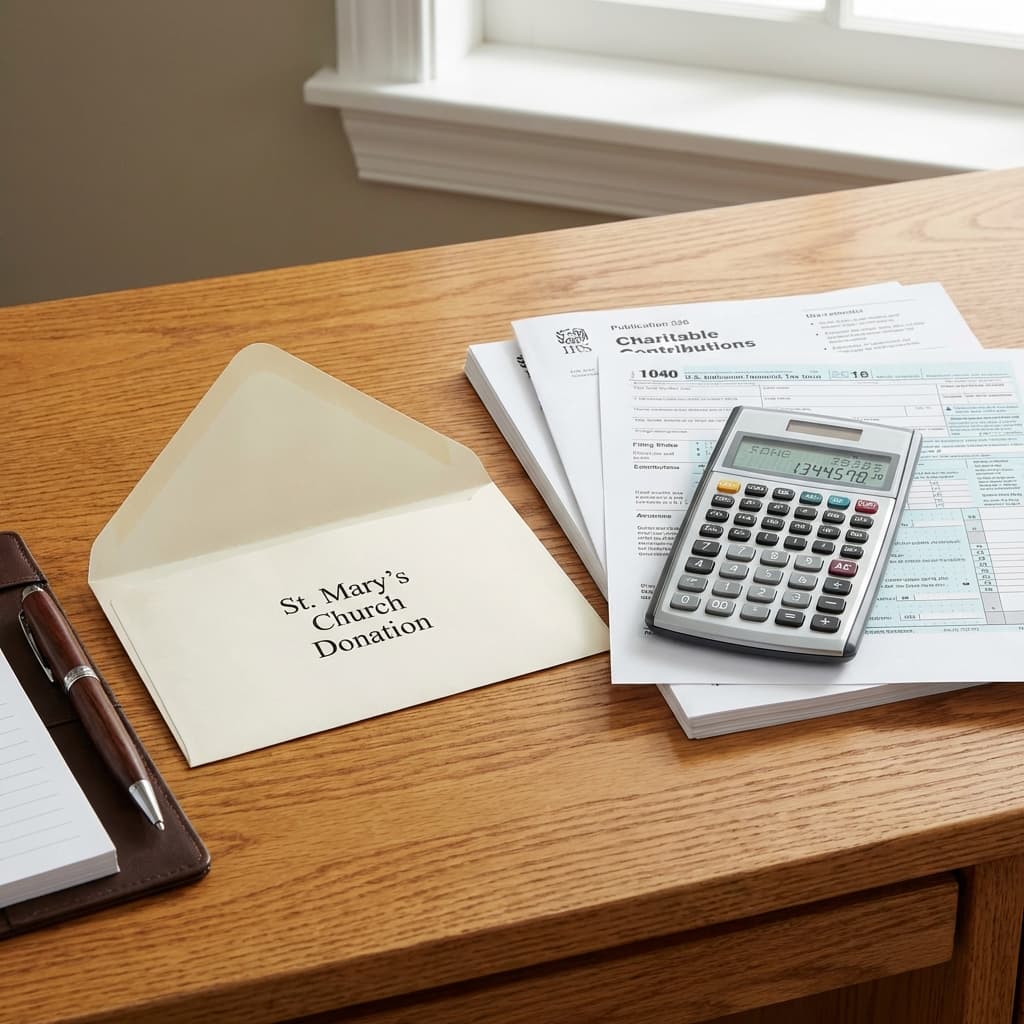
If you donated to a church this year—tithes, offerings, online gifts, or event payments—you're probably asking one question: can I deduct this on my taxes?
This guide is built to be practical. We cover exactly what qualifies, what doesn't, what proof you need, and even provide copy-paste receipt language your church can use to stay compliant.
Important: This is general information, not professional tax advice. For complex situations, always consult a certified public accountant or tax professional.
Most people assume everything given to a ministry is 100% deductible. However, the IRS has specific definitions. To claim a church donation tax deduction, the contribution must meet several criteria.
If you claim a deduction for any single contribution of $250 or more, the IRS requires a contemporaneous written acknowledgment (CWA) from the church. Bank statements alone are not sufficient for gifts above this threshold.
Your church-issued donation receipt should be received by your filing date and clearly state if any goods or services were provided in return.
If you gave $25 each week, totaling $1,300 for the year, you don't strictly need the complex CWA for each gift since they are separate contributions under $250. However, keeping a January 31st annual statement is best practice to avoid audit headaches.
Churches can use these templates to stay IRS-compliant. Simply replace the bracketed sections with your specific data.
Subject: Charitable Contribution Acknowledgment

Thank you for your contribution to [Church Name]. We received your cash contribution of $[Amount] on [Date].

No goods or services were provided in exchange for this contribution, other than intangible religious benefits.
Thank you for your payment of $[Amount] to [Church Name] on [Date].

In exchange, you received [Description of benefit] with an estimated fair market value of $[Value]. For federal income tax purposes, the deductible portion of your payment is limited to the amount exceeding the value of goods or services provided.
Often yes if the church is a qualified charitable organization, you itemize deductions, and you follow IRS substantiation rules—especially the requirement for a contemporaneous written acknowledgment for any single contribution of $250 or more.
Keep reliable records such as bank statements, card records, or online confirmations. A contemporaneous written acknowledgment is required for any single donation of $250 or more.
The $250 threshold applies to a single contribution, and separate contributions are not automatically aggregated. Weekly offerings under $250 are treated as separate contributions, though an annual summary is still helpful.
Only the amount you paid above the fair market value of the goods or services you received may be deductible. For quid pro quo payments over $75, the organization must provide a written disclosure statement estimating the value of what was provided.
Don't let the $250 rule stress you out. Generate all your annual statements in seconds with our privacy-first tool.